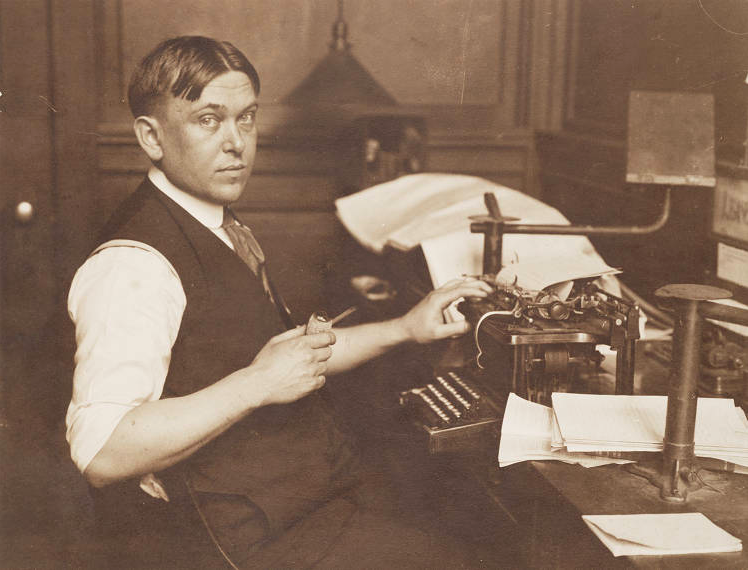
A Mind That Never Suffered Fools, Now Available to Discuss Yours
Henry Louis Mencken spent half a century doing what no other American journalist has managed before or since: making the republic furious with laughter at itself. He called democracy "the theory that the common people know what they want, and deserve to get it good and hard." He called the American South "the Sahara of the Bozart." He covered the Scopes Trial and found it to be a circus, the defendant innocent, and William Jennings Bryan a fraud of the highest order — and he said so in print, daily, until Bryan was in his grave.
Every decent man is ashamed of the government he lives under.
He was the editor who introduced Nietzsche to American readers, who championed Theodore Dreiser and Sinclair Lewis when no one else would touch them, who wrote three volumes on the American language that remain indispensable, and who filed more column inches of opinion from his Hollins Street rowhouse than any sane man should have attempted.
He despised Prohibition, the Ku Klux Klan, William Jennings Bryan, Franklin Roosevelt, quack medicine, uplifters, reformers, moralists, evangelists, politicians of every stripe, and what he called the "degraded" taste of the American public — while simultaneously loving beer, Bach, Brahms, jazz, steamcrabs, and the English language in all its magnificent vulgarity.
He died in 1956. He has been observing ever since. He is prepared to discuss what he has seen. He is not optimistic. He is, however, entertaining — which is more than can be said for most of the republic's current commentators.
He will not agree with you. He will not flatter you. He will, if pressed, admit that you have raised a point worth considering before explaining, in considerable detail, why you are nonetheless wrong.